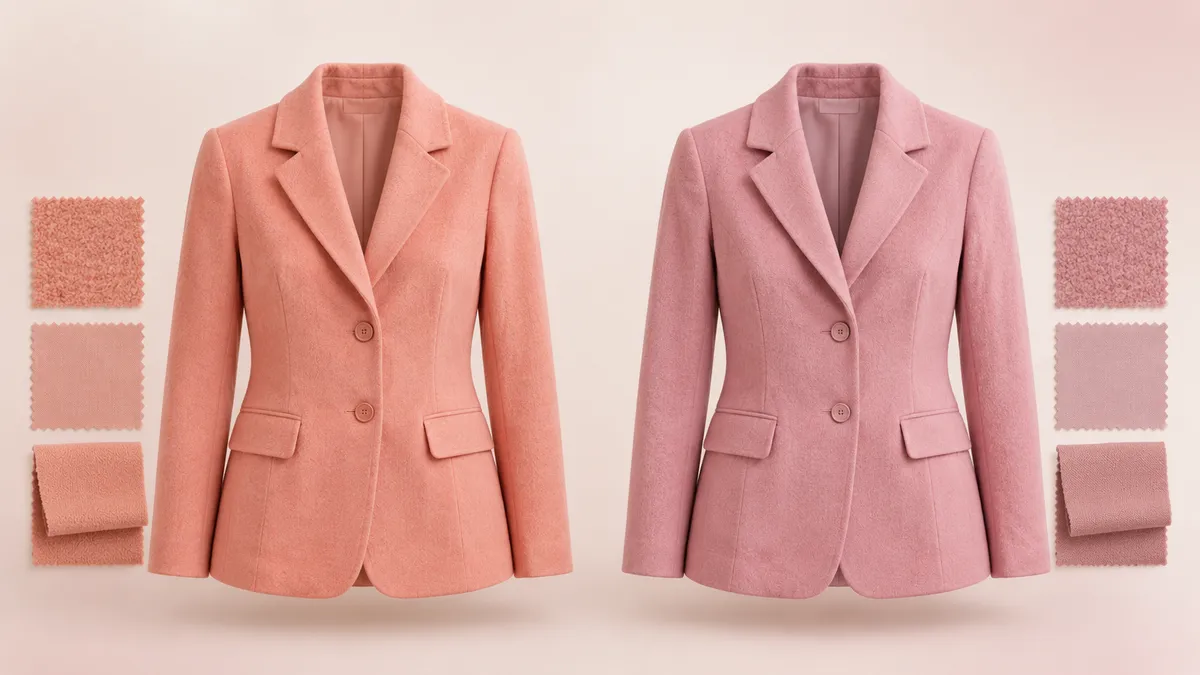
The useful question is not “Which family am I allowed to wear?” It is “What kind of energy do I want this jacket to bring?” Warm pinks feel sunlit, relaxed, and rich beside cream, camel, chocolate, and olive. Cool pinks feel crisp, electric, or romantic beside charcoal, navy, black, silver, and burgundy. Once you can spot that direction, shopping and styling become much faster.
Warm Pink vs. Cool Pink at a Glance
| Look for | Warm pink | Cool pink |
|---|---|---|
| Color pull | Peach, coral, apricot, orange-red | Rose, berry, magenta, lilac, blue-red |
| Typical names | Peach pink, shell, salmon, coral, warm blush | Cool rose, orchid pink, raspberry, fuchsia, blue pink |
| Easy light neutrals | Ivory, cream, oatmeal, sand | Optic white, dove gray, cool taupe |
| Easy dark neutrals | Chocolate, espresso, olive-brown | Charcoal, ink navy, black |
| Strong accent | Tomato red, rust, turquoise | Burgundy, cobalt, silver |
| Overall mood | Sun-warmed, grounded, softly energetic | Clear, polished, vivid, slightly dramatic |
Color names are clues, not guarantees. Two brands can call completely different shades “blush.” Trust the garment under neutral light more than the marketing label.
The Fastest Visual Test
Put the pink beside two references: a clean orange-red and a blue-based magenta. If the jacket feels more at home near the orange-red, it is probably warm. If it feels more connected to magenta, it is probably cool.
Then add a gray card, white tee, or sheet of plain white paper. Warm pink often makes the white feel cooler by comparison; cool pink may make the same white feel creamier. This is not laboratory color measurement. It is a practical wardrobe test that reveals the direction your eye already sees.
What about neutral pink?
Dusty rose, muted ballet pink, and some mauves can sit close to the middle. They may contain both warmth and blue-gray softness. Treat them as flexible bridge shades: style them with chocolate for warmth, charcoal for coolness, or a mix of both for a deliberately balanced palette.
Warm Pink Jackets: The Sunlit Side of the Palette
Peach pink
Peach pink is pink with a visible golden or orange lift. It looks especially fresh in linen blazers, washed denim, lightweight bombers, and matte cotton. Pair it with ivory and dark indigo for an easy daytime formula, or with olive and cognac when you want more depth.
Coral pink
Coral has more saturation and more red-orange energy. It can carry a structured blazer or sporty shell without feeling delicate. Keep the rest of the outfit simple—ecru trousers, chocolate sandals, deep denim—and let coral do the talking.
Warm blush and salmon
Warm blush is quiet; salmon is more visibly orange. Both look expensive beside cream, camel, tobacco brown, and soft gold. In leather, these colors can read modern rather than sweet because the material adds definition.
Cool Pink Jackets: The Clear, Rosy Side
Blue rose
A cool rose has a clean, slightly blue cast. It works beautifully in tailoring and smooth technical fabrics, especially with charcoal, white, dark navy, or oxblood. It is polished without being shy.
Raspberry and fuchsia
These are high-energy cool pinks. Raspberry carries red depth; fuchsia adds a stronger magenta note. Both become sharper beside black, cobalt, silver, or ink denim. Choose simple silhouettes so the color feels intentional rather than busy.
Lilac pink and cool baby pink
These pale shades can look airy in quilting, brushed wool, and soft denim. Gray, cocoa, and navy give them enough weight. Pure white makes them crisp; cream introduces a subtle warm-cool tension that can look especially modern.
How Fabric Changes the Temperature of Pink
| Material | What it does to warm pink | What it does to cool pink |
|---|---|---|
| Matte cotton or denim | Makes peach and coral feel casual and sun-faded | Softens blue pink and makes it easier for daytime |
| Smooth leather | Deepens warm blush and gives it edge | Makes fuchsia or cool rose look sharper and more graphic |
| Suede | Adds earthy brown shadow | Can mute a cool rose toward mauve |
| Satin or coated finish | Pushes coral toward glow | Makes magenta and fuchsia feel brighter and more electric |
| Quilted nylon | Turns warm pink sporty | Makes icy pink look clean and technical |
| Wool or bouclé | Gives warm pink cozy dimension | Gives cool pink a soft, powdery finish |
Surface matters because color is light. Gloss throws highlights back at you; suede absorbs them; quilting creates shadows; denim introduces white threads and wash variation. Compare jackets in the material you actually want, not only on a flat digital swatch.
Three Outfit Formulas That Make the Difference Obvious
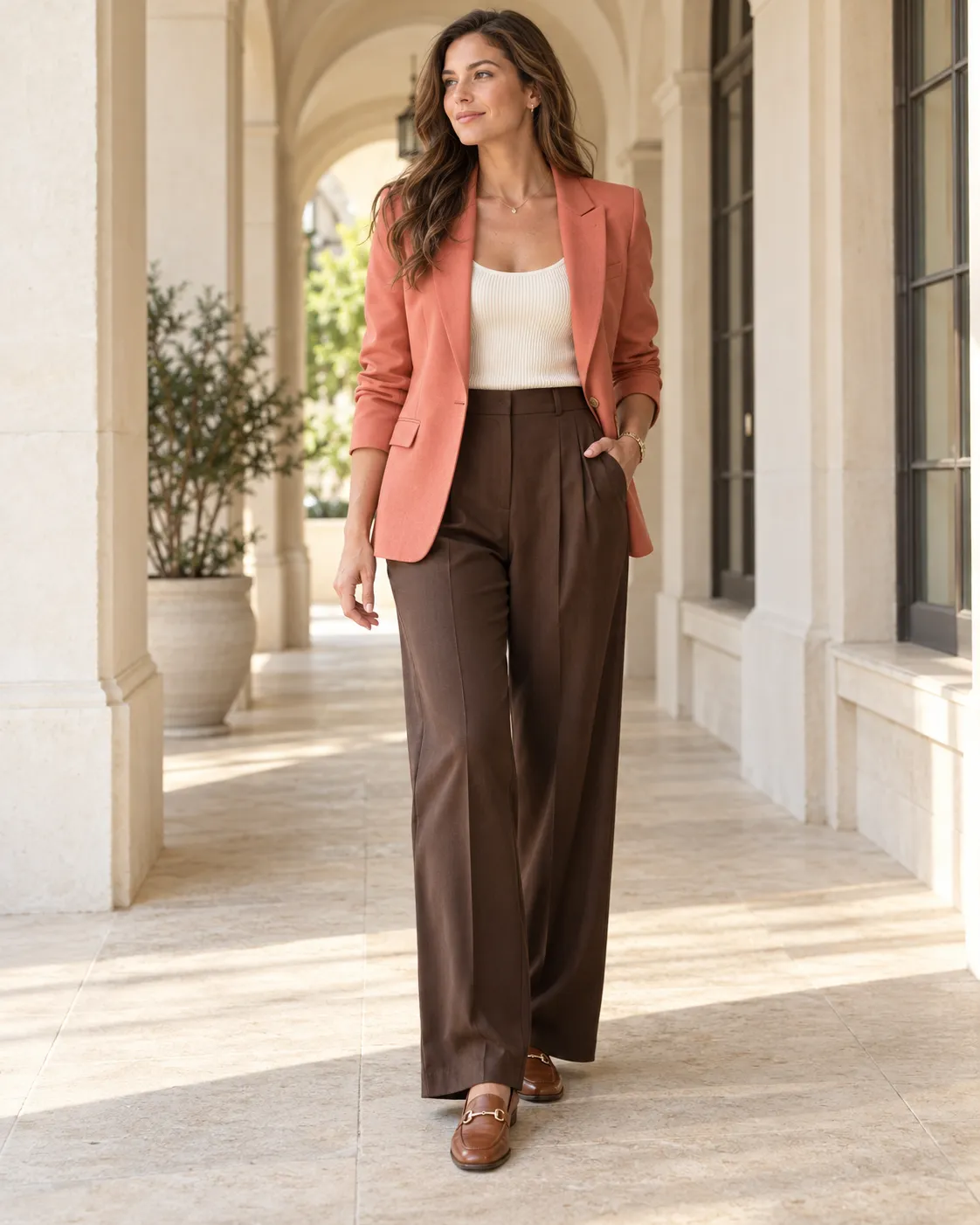
1. Warm city neutral: coral blazer + ivory + chocolate
Wear a coral single-breasted blazer over an ivory knit tank with chocolate wide-leg trousers, cognac loafers, and a warm-gold earring. The brown family repeats coral’s warmth, while ivory keeps the top half luminous.
Switch it: Replace the blazer with a coral denim jacket and the trousers with dark indigo jeans for a casual version.
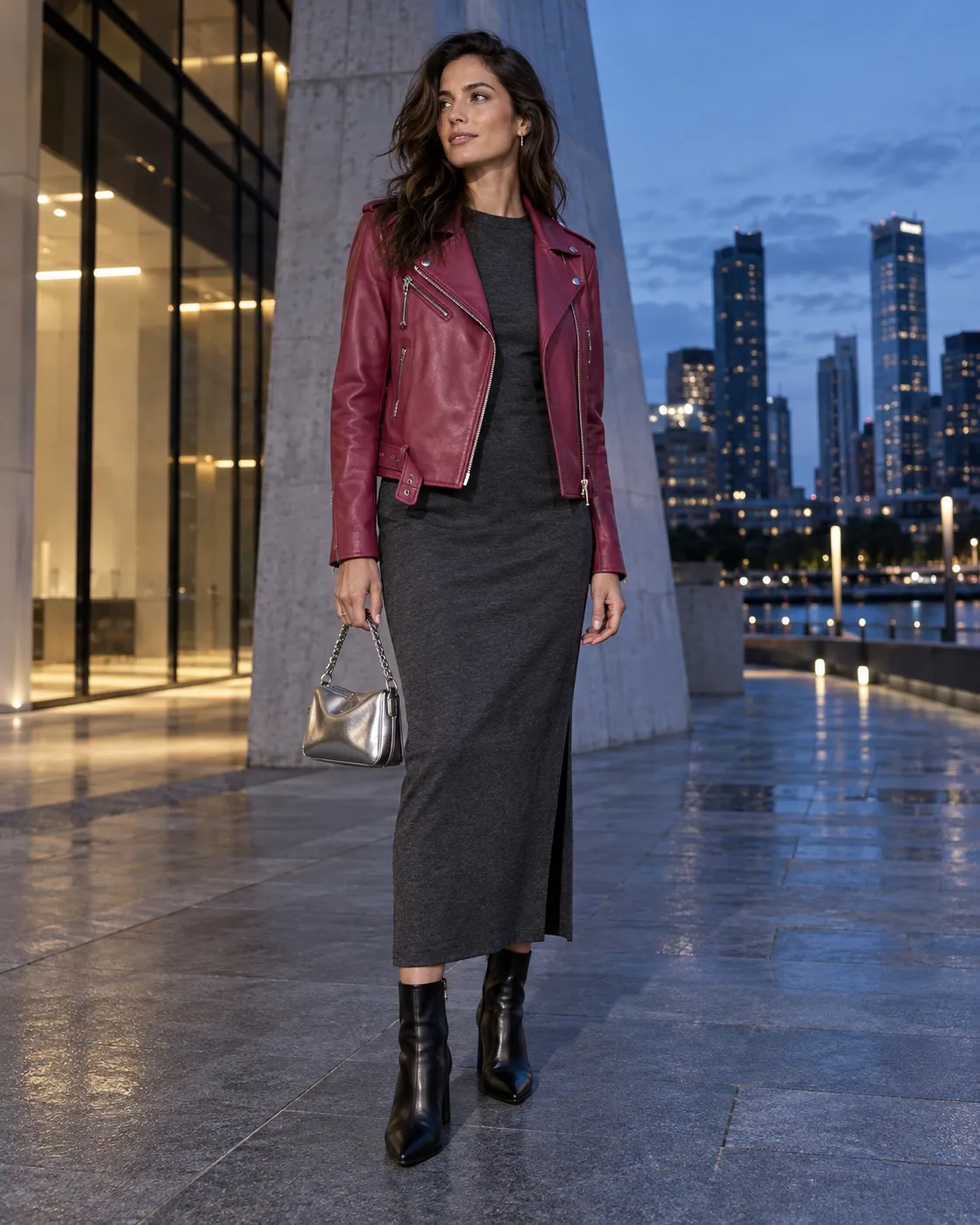
2. Cool graphic contrast: raspberry moto + charcoal + silver
Layer a raspberry leather moto over a charcoal column dress with black ankle boots and a compact silver bag. Charcoal supports the blue-red pink without competing, and silver repeats its clean temperature.
Switch it: Use a cool-rose blazer and charcoal trousers when the occasion calls for tailoring.
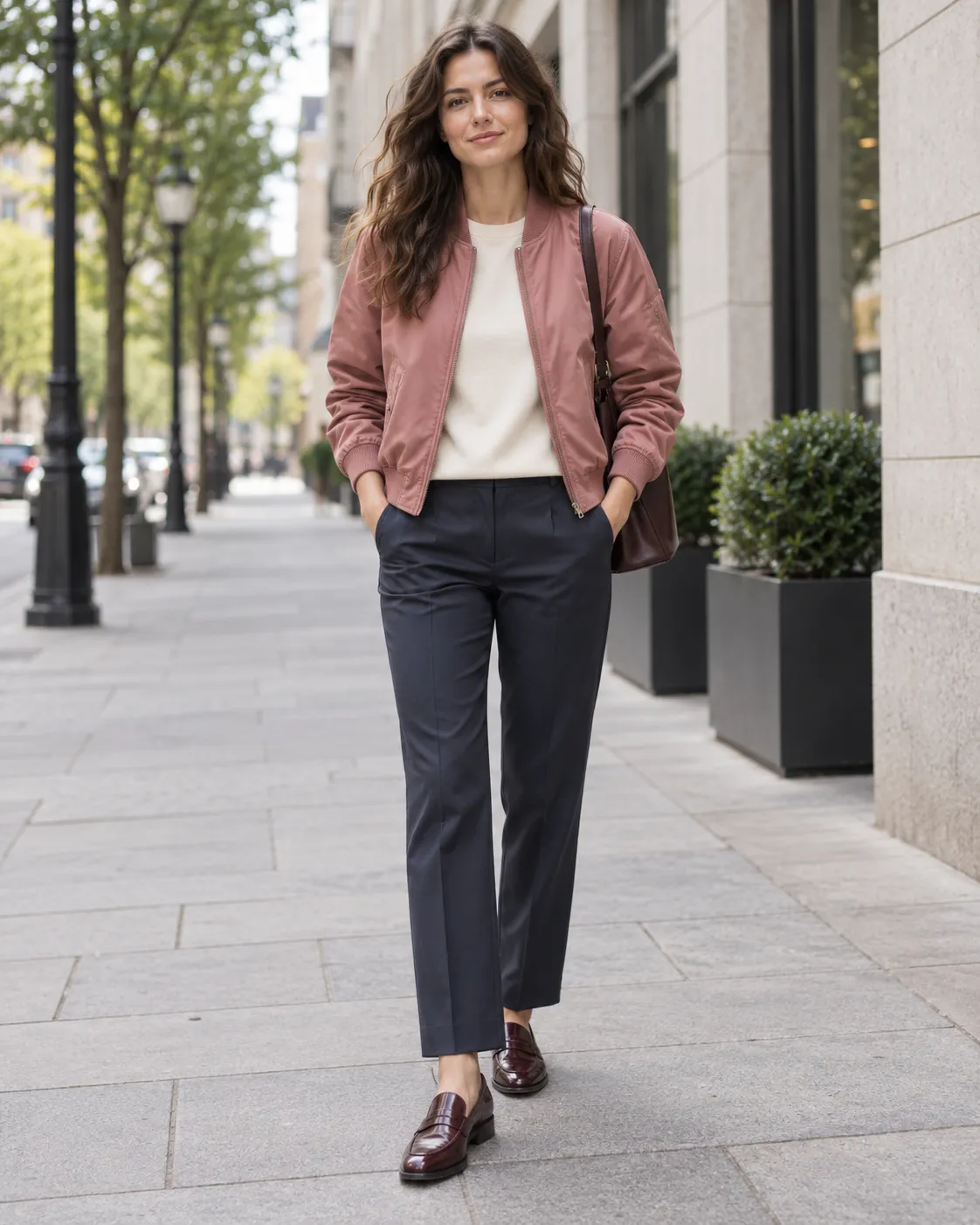
3. The bridge palette: dusty rose bomber + cream + navy
Pair a muted dusty-rose bomber with a cream crewneck, navy straight trousers, and burgundy loafers. Cream brings out the warmer side of dusty rose; navy and burgundy reveal its cooler depth. This is the formula for a pink that refuses to sit neatly in one camp.
Switch it: Trade navy for dark denim and burgundy for espresso when you want a softer finish.
See the Temperature Shift
The Neutral Pairing Guide
White and cream
Optic white sharpens cool pink. Cream makes warm pink glow. Reversing the pairings can also be interesting: fuchsia with cream feels less severe, while coral with white looks more athletic and graphic.
Gray and charcoal
Gray is the easiest cool bridge. Pale gray makes baby pink modern; charcoal grounds raspberry and fuchsia. Warm pink can still work with gray—choose a heathered or taupe-gray so the combination does not feel disconnected.
Camel and chocolate
Camel is a natural partner for peach and warm blush. Chocolate is more versatile: it enriches warm pink but also creates an elegant temperature contrast with cool baby pink and lilac pink.
Navy and black
Navy gives both families depth without flattening them. Black creates the strongest edge, especially with cool pink; with warm blush, repeat black in two small places—a belt and shoe, for example—so it feels deliberate.
Why Pink Changes Between the Store, Your Phone, and Daylight
Warm indoor bulbs add yellow and can make cool pink look warmer. Blue daylight can cool a coral shade. Phone cameras and retailer edits may adjust white balance, while screens display color differently. A glossy sleeve can also appear lighter at the highlight and darker at the fold.
For a useful check, look at the jacket near a window, then in the lighting where you expect to wear it most. Place one familiar neutral beside it. If the color only works in one carefully staged photo, it is not giving you enough information.
Warm or Cool: Which Should You Choose?
Choose warm pink when you want the jacket to feel approachable, earthy, sunny, or softly retro. Choose cool pink when you want clarity, polish, contrast, or a stronger fashion statement. Choose a muted middle pink when versatility matters more than a clearly warm or cool identity.
If your question is specifically about how pink interacts with your complexion, continue to our guide to pink jackets by skin tone. If you are ready to shop by garment, compare pink leather jackets, pink puffers, pink blazers, and pink denim jackets.
Frequently Asked Questions
Is blush pink warm or cool?
It can be either. A peachy or beige blush is warm; a blue-rose or lilac blush is cool. Compare the garment with coral and magenta references rather than relying on the word “blush.”
Is dusty pink warm or cool?
Dusty pink often sits near neutral because gray softens its temperature. Some versions lean brown and warm; others lean mauve and cool. Fabric and surrounding colors can pull it in either direction.
Can I wear warm and cool pink together?
Yes. Keep the silhouettes simple and let one pink dominate. A coral jacket with a small raspberry bag, or a cool-rose blazer with a peach knit, can look deliberate when a shared neutral connects them.
What neutral works with every pink?
Dark navy is the closest thing to a universal answer. It gives pale pink definition, supports coral, and feels less stark than black with bright cool pinks.
How can I judge a pink jacket online?
Look for multiple photos, including a neutral background and a close fabric view. Compare the brand’s color name with the actual images, but plan to confirm the shade in daylight because screens and editing can shift it.
Keep Exploring
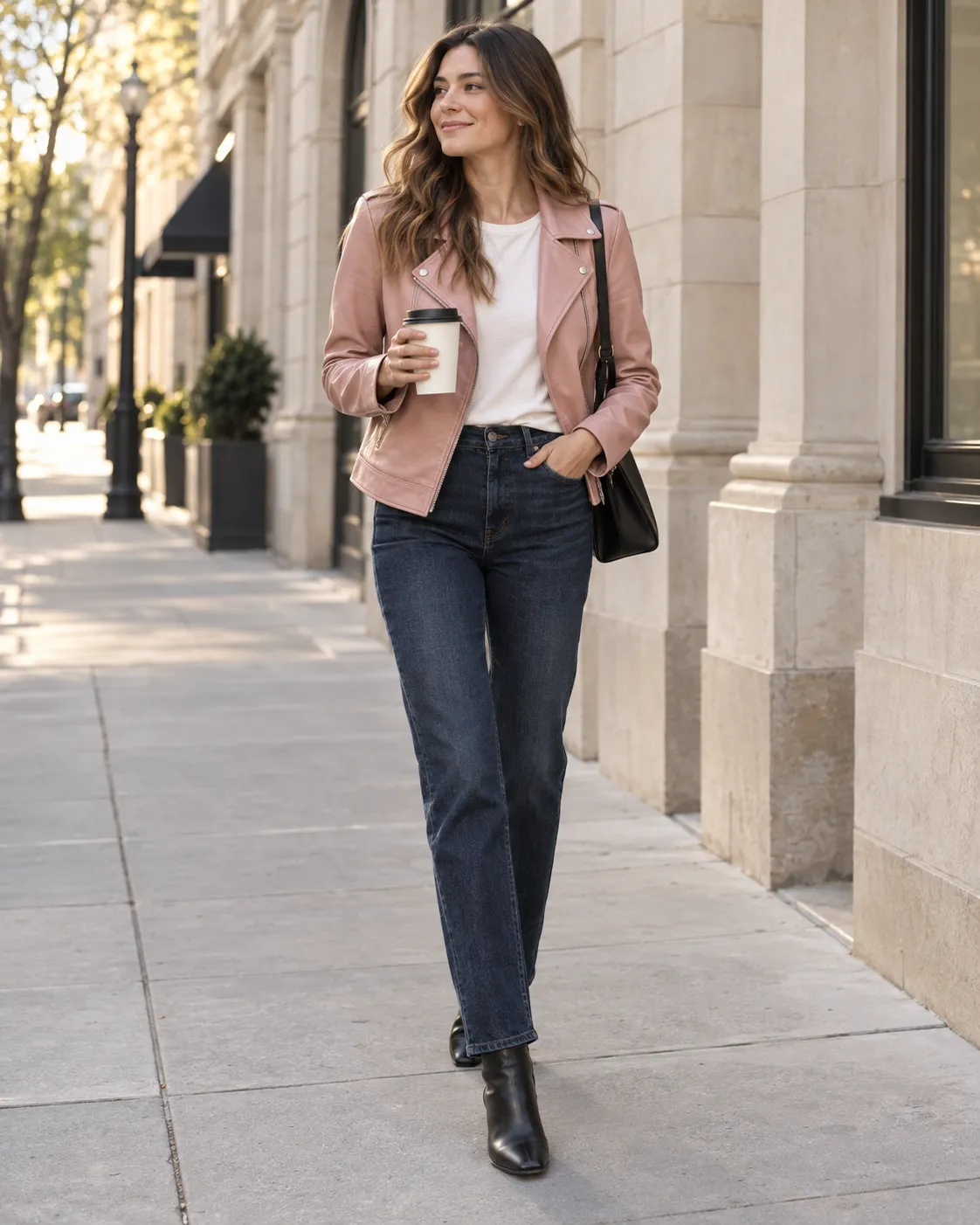
Which Pink Suits You?
Explore blush, coral, rose and fuchsia with a fresh approach to skin tone.
Read the guide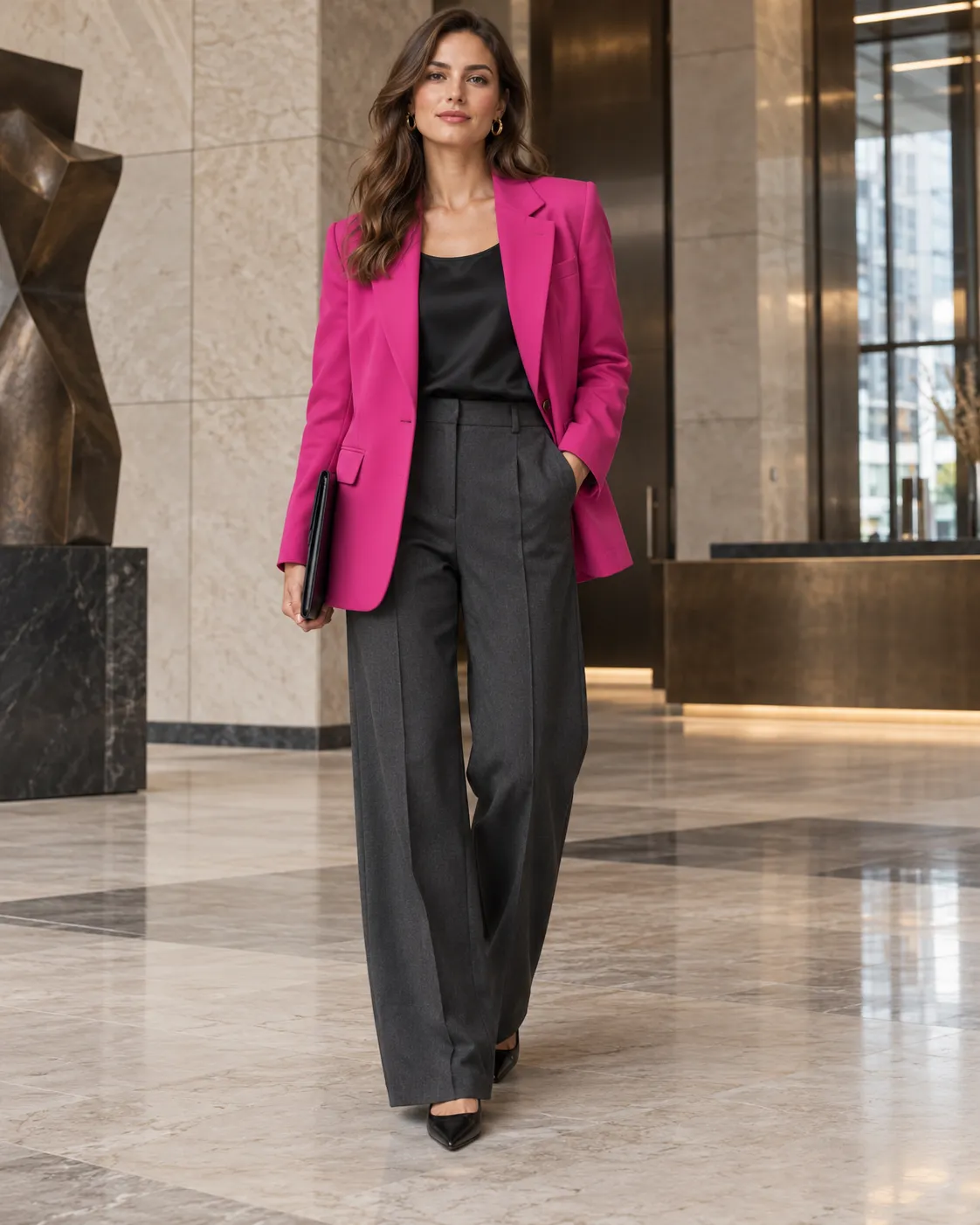
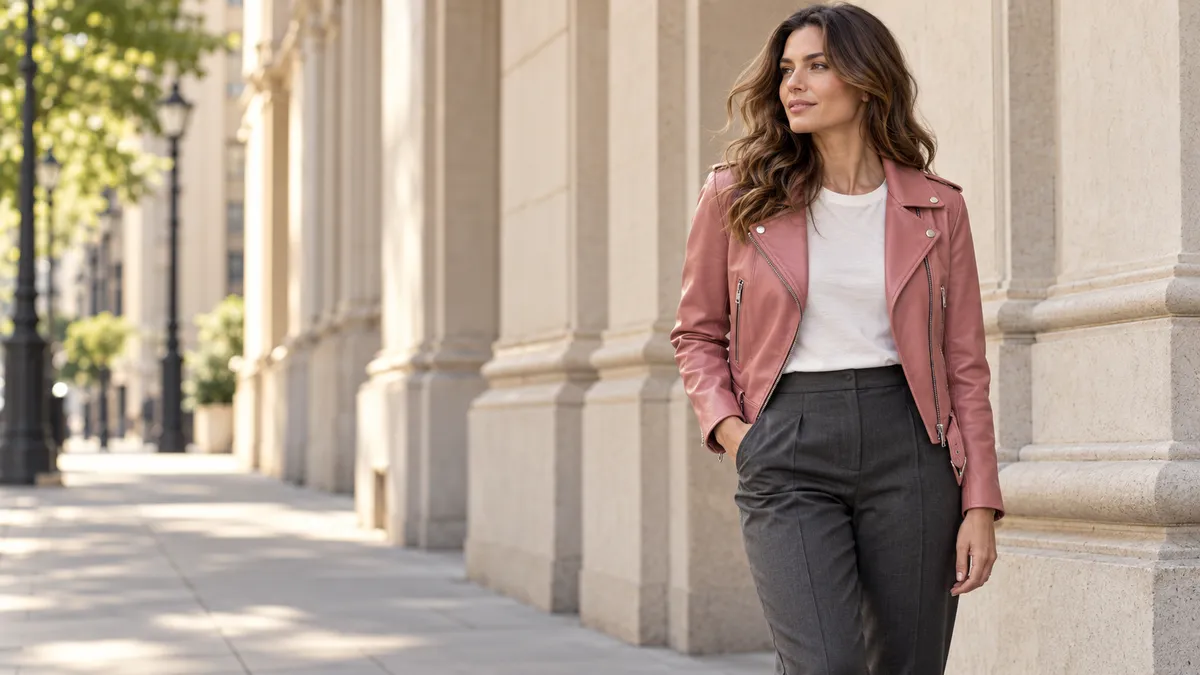

The Pink Puffer Edit
Compare lengths, insulation and silhouettes for your winter wardrobe.
Read the guide
The Pink Blazer Edit
Soft tailoring, sharp shoulders and four distinct jackets to explore.
Read the guide